
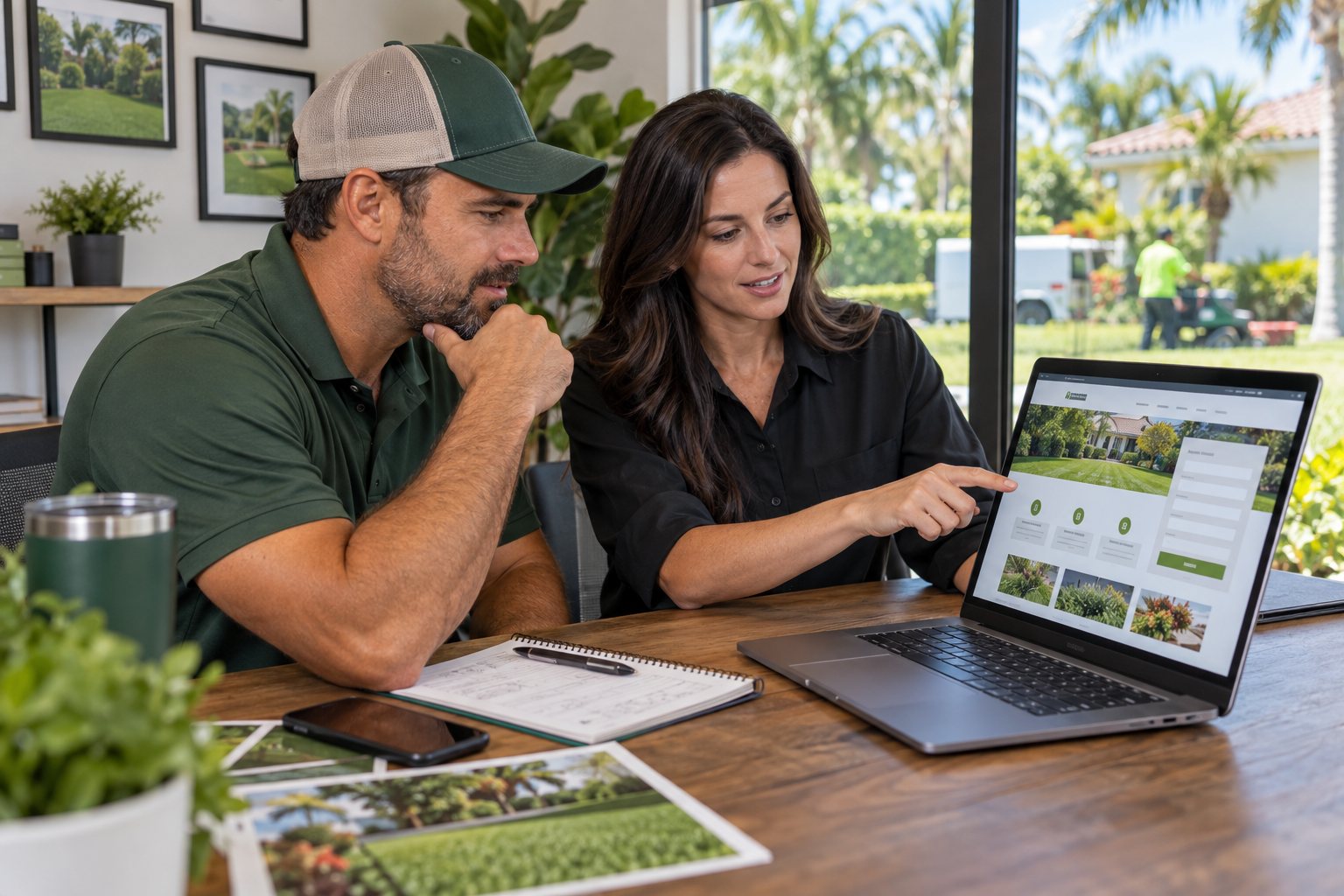
A lawn care company does not need a website that simply looks green and attractive. It needs a website that helps a property owner understand the work, decide whether the company is a fit, and request an estimate without unnecessary friction. That makes web development a practical sales and operations project, not just a visual redesign.
The strongest lawn-care websites are built around the questions people ask before they call: Do you provide the service I need? Do you work in my area? Can I see the quality of the work? What happens after I request an estimate? A clear answer to those questions gives the business a stronger foundation for referrals, local visibility, paid campaigns, and repeat customer communication.
Organize the website around real lawn-care services
Start with the work the company actually wants to sell. Lawn mowing, landscaping, irrigation, tree and hedge trimming, seasonal cleanup, mulch installation, pest treatments, and commercial maintenance may have different buyers and different expectations. Putting every service into one paragraph makes it harder for a visitor to find the right answer and harder for the team to measure which demand is creating inquiries.
A better build gives priority services their own useful sections or pages. Each one should explain what is included, who the service is for, what information affects an estimate, and how the customer can begin. The content should be specific enough to help a person decide without inventing guarantees, service areas, project counts, or results that the company cannot verify.
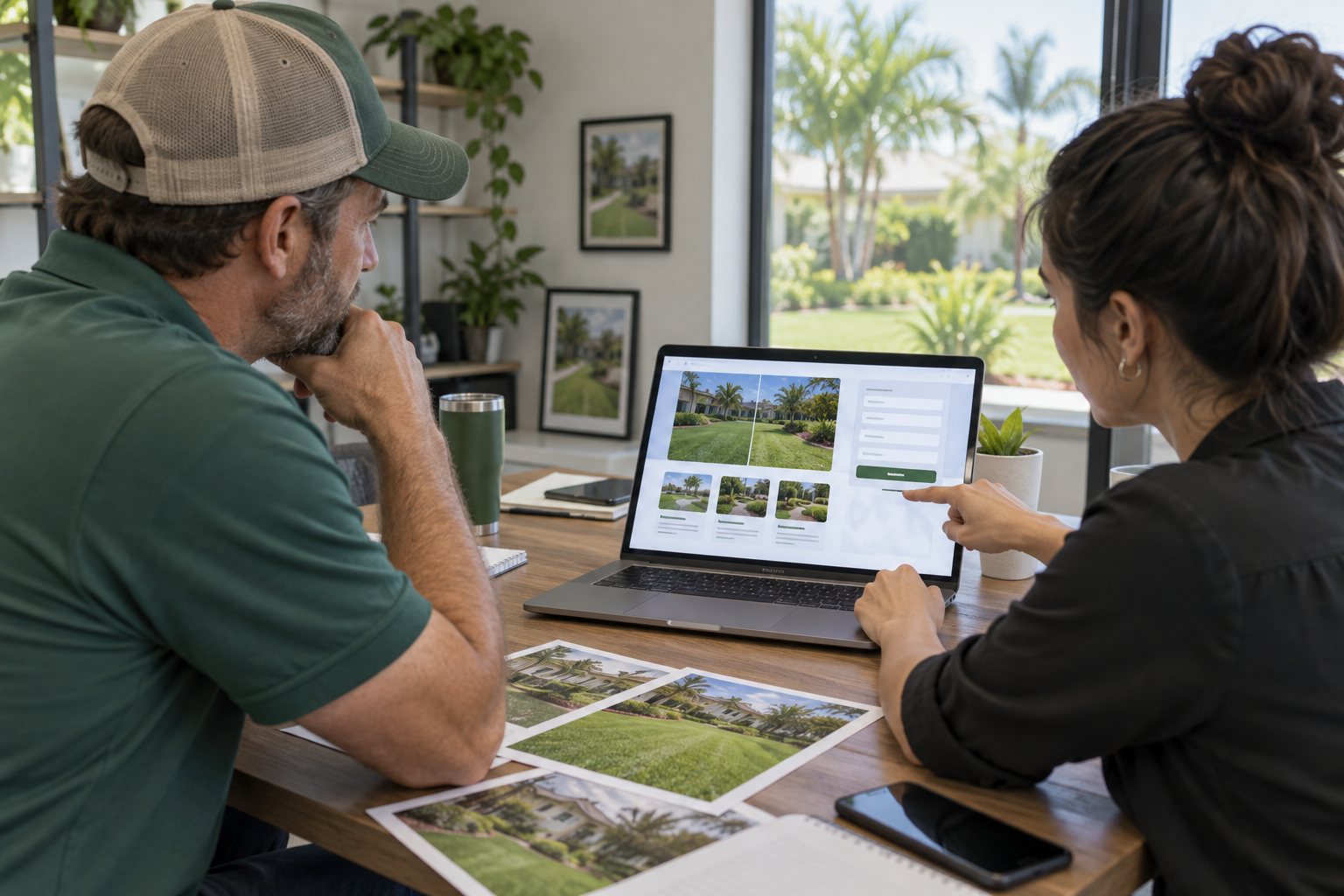
Make the estimate request easy to complete
Many lawn-care prospects are on a phone, standing outside, or comparing providers between other tasks. The primary action should be easy to see and easy to use. Depending on the business, that could be a call, a short estimate form, a text or WhatsApp conversation, or a request to schedule a property visit.
Good web development considers what the team needs to qualify the request without turning the first interaction into an interrogation. A form may ask for the property type, service needed, general location, preferred contact method, and a short description. Optional photo uploads can be useful when the business has a secure process to receive and manage them. Every form needs a tested delivery path, a clear confirmation, and an owner who knows where new inquiries arrive.
Show proof without making the page feel like a gallery
Before-and-after photos can be powerful for lawn care, but they work best when they explain a real job. Add a short caption that describes the service, the customer's goal, or the condition that was addressed. Use images the business owns or has permission to publish. Do not imply that one property's result is guaranteed for every property.
Reviews can also help, especially when they provide context about communication, reliability, cleanup, or the quality of the finished work. They should be displayed accurately and kept current. A website does not need a wall of testimonials to look credible; a small amount of relevant proof placed near the decision it supports is usually more useful.
Build for the way lawn-care customers use the site
Mobile behavior deserves attention from the first wireframe. The phone number should be usable, the form should fit on a small screen, images should load efficiently, and the visitor should not have to hunt through a large navigation menu to find service details or a request button. The site should also remain understandable when a visitor has animations disabled or a slower connection.
Desktop users may want to compare service options, read about commercial maintenance, review a service area, or send the website to a property manager. A responsive site supports both situations without creating two disconnected experiences. Performance, accessibility, clear headings, descriptive image text, and tested links are part of the build quality, not optional polish.
Use WordPress and AI carefully
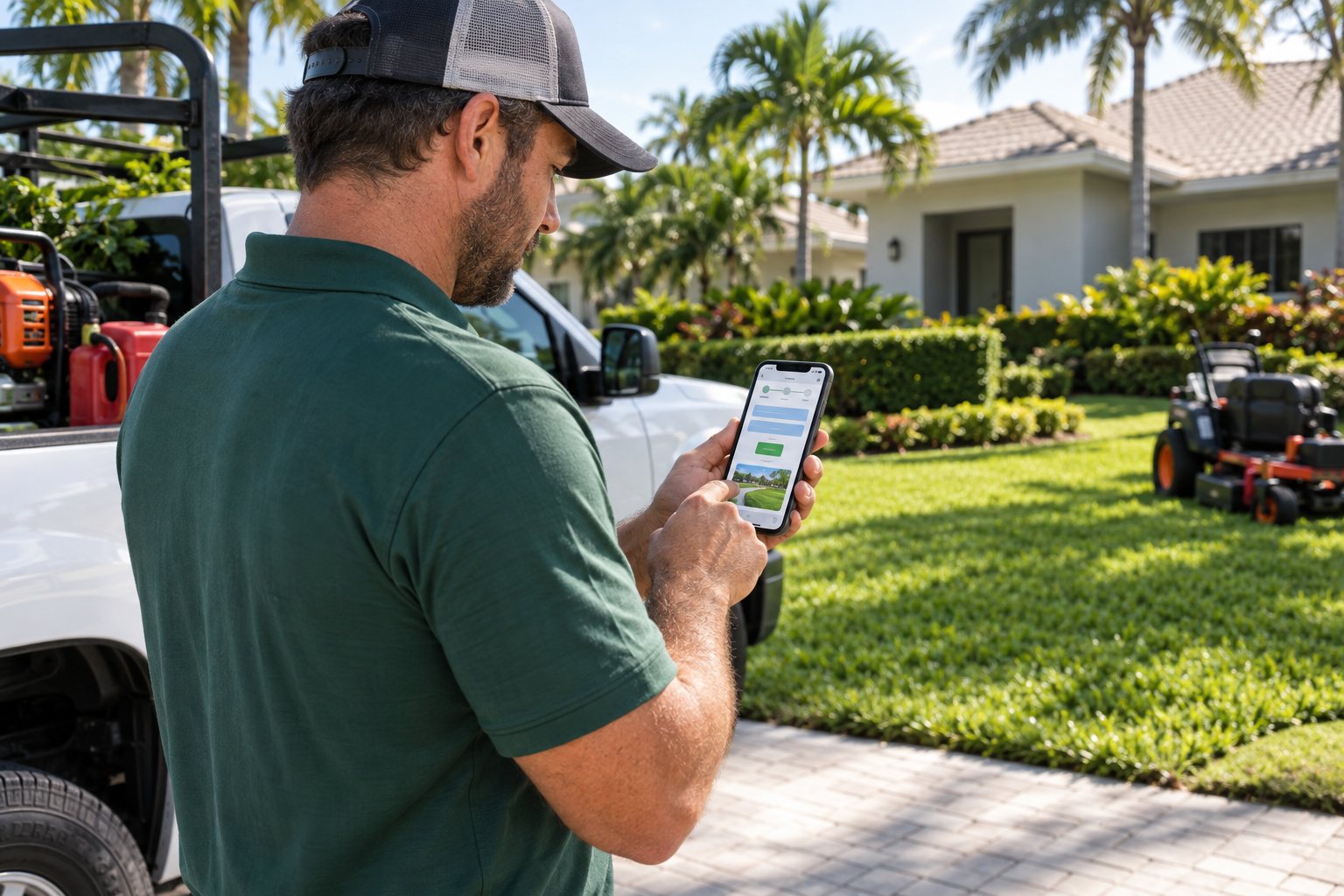
WordPress can give a lawn-care company a practical way to maintain service pages, seasonal updates, project photos, and helpful resources after launch. The build should include a clear content structure, reliable backups, security updates, and an editing workflow that does not require the owner to rebuild the site for every small change.
AI-assisted development can help organize service information, draft page outlines, compare content structures, and identify quality-control checks. It should not be trusted to invent service details, write unsupported claims, or publish a generic page without human review. The owner and development team still need to confirm the service list, coverage area, customer path, image rights, form routing, and final presentation.
Connect the site to the next growth layer
Once the website is useful, the company can connect it to the channels that bring people to the decision. A Google Business Profile should match the business information on the site. A paid campaign should lead to a page that matches the service in the ad. Social content can point to seasonal services, project stories, or helpful maintenance guidance instead of sending every visitor to a generic homepage.
Search fundamentals support those efforts, but they should follow the customer experience. A website development project may include page titles, internal links, structured content, analytics, and launch checks so the business can learn what is working. No responsible developer can guarantee a specific ranking or number of estimate requests, but a well-built site gives every future marketing effort a clearer destination.
Choose a development partner that understands the workflow
The right partner should ask how the business receives inquiries, which services are most profitable, what information affects an estimate, who approves content, and how the site will be maintained after launch. They should be able to explain what will be built, what the business needs to provide, and how the final customer paths will be tested.
iDvlpr Marketing builds AI-assisted and WordPress websites around the way a real business sells and serves customers. Review our web design and development services, explore our WordPress development support, or contact iDvlpr Marketing to discuss a new lawn-care website, redesign, or estimate-request improvement. You can also call (786) 566-3596 or email gary@idvlprmarketing.com.
Important: This article is general website-planning information. Website performance and lead volume depend on the business, market, offer, customer demand, follow-up, and ongoing work. No ranking, traffic, or lead result is guaranteed.